コロラド対ジョージア工科大学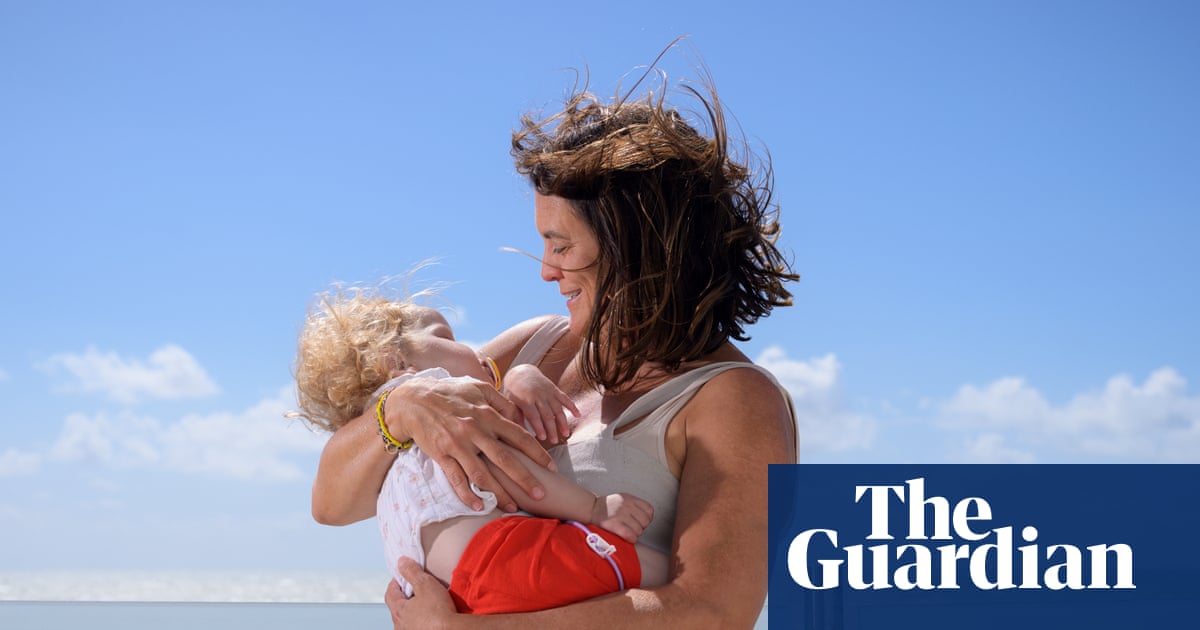
My daughter Elsie has beautiful curls – blond like a little Botticelli cherub’s, hair that someone dark like me could only ever dream of. She laughs a lot, has a cheeky sense of humour and soaks in all the sounds around her – rustling leaves, the sea, a dog barking, children playing around a pool, me impersonating the alarm clock every morning, me impersonating monkeys. Indeed, me impersonating any animal.
Sound is important for Elsie because she has a visual impairment and, while we know she has some peripheral vision, is legally classed as blind. As a result, she uses her tongue to check her environment. When she’s excited it sticks out, tasting the air around her, licking anyone close, sensing space. And when she likes the taste of something she keeps her tongue out until you give her more. This is how we know she likes lollies.
She makes new sounds every day. If she suddenly realises she’s on her own, she’ll soon make her signature “Ah, ah!” sound until she’s got company again. But at 18 months she is behind in her development and we don’t yet know if she will be verbal, so for now we are learning to understand her in the ways she chooses to show us.
Elsie was born with a rare neurological condition – so rare that there are fewer than 100 known cases in the world. It is a mutation in the RARB (retinoic acid receptor beta) gene, which, when working properly, helps control vitamin A signalling, vital for the proper embryonic development of the eyes, brain, lungs and spinal cord. It is de novo (meaning it is not hereditary), and the effects are progressive.
She spent most of the first eight months of her life living in hospitals because of one terrifying symptom. She would stop breathing every time she got upset, turning blue, sometimes for two to three minutes at a time. At its worst, this was happening multiple times a day. For each episode she would need emergency “bagging”, with a mask placed on her face so air could be forced into her lungs from a hand-squeezed bag. These apneas, as doctors call them, still happen regularly but now they are shorter and far less frequent. They are usually resolved with oxygen from a cylinder – but without that she would be at constant risk of dying.
Born in March 2025, Elsie has been home since February this year and she, my partner Dan and I are making up for lost time. She is loving and likes nothing more than snuggling up with her favourite people, taking her hands and running them down someone’s face, squealing with excitement when she finds a beard. When she’s really happy, she makes a deep sigh and sucks her dummy so hard that she looks like a little rabbit.
Elsie loves music, a positive legacy perhaps from hospital days when musicians would tour the wards every week. Brent Holmes’ Kooky Little Coconut is her favourite song, in which the little coconuts move to the island to be free with their kooky family, though she prefers French nursery songs to British, something that makes my French mother very happy.
Like me, Elsie loves water; she felt the ocean on her little feet for the first time this summer. We had to keep her upright as her head control is weak, but every time I play the video we made of the sounds of the waves, her smile lights up my day. Despite her limited mobility, I am always amazed when every morning she has somehow manoeuvred herself to take up half the bed.
But there are days when the thought of what Elsie might not be able to do in future hits me like a tsunami.
My journey to having Elsie was long. Now 50, I’ve worked as a film publicist since leaving university. My 30s came and went as I climbed the career ladder and bought a flat; there were parties, travelling, yoga and surf retreats, festivals, cats and a mixed bag of relationships. I knew I wanted a family one day, and thought I’d bought some time by freezing my eggs.
By my early 40s, I’d left London to start a new life in Lewes in East Sussex, drawn by the sea and countryside.
Then came lockdown. I took voluntary redundancy from the agency where I worked and threw myself into setting up my own PR consultancy. We specialise in publicising independent films, particularly documentaries and features with a strong social conscience, including For Sama, 20 Days in Mariupol, Collective, No Other Land, All the Beauty and the Bloodshed, The Voice of Hind Rajab and Mr Nobody vs Putin – all Oscar nominees or winners, highlighting humanitarian issues such as the wars in Syria, Gaza and Ukraine, corporate corruption and racial prejudice. And now here I am, working on the biggest campaign of them all, for my own daughter.
Once the first lockdown was over, I was single again but more determined than ever to become a mother. I was told I’d be more likely to conceive if I used the eggs I’d frozen a decade before, so I started IVF using these and donor sperm. But after three failed attempts to conceive this way, and more using the eggs that my body was still producing, I realised I would not be able to have a baby that was genetically mine. This hit me hard. It felt like my journey to motherhood had come to an end.
Work was going from strength to strength, and my company was flourishing – but my sense of longing wouldn’t shift. A year later, at the end of 2024, I decided to try again one last time, this time with donor eggs. I had two friends who had started families this way, and seeing them together persuaded me. I had just begun my relationship with Dan, and he was supportive, but as we’d not long met I decided to stay on my original path.
Six months later, I was pregnant. At 48, I sailed through the pregnancy, hitting the all-important milestones – 12-week scan, 20-week scan, etc – with the ease that had characterised much of my life. In retrospect, I now ask myself: was I too complacent? Had I not had to fight for enough?
The night before I gave birth to Elsie, I couldn’t sleep. I joked that I felt as if I was preparing for an execution. I’m an overthinker, so put it down to that, but I felt a sense of impending doom. While my pregnancy had been healthy, in those final days Elsie kept moving position and I had started to worry. In hindsight, perhaps it was a sign.
When I was wheeled into surgery for my caesarean, Dan remembers me asking if the injection would hurt. The anaesthetist told me it was like a bee sting and I said, “Oh, but a bee sting really hurts,” which made everyone holding their sharp and shiny instruments laugh.
There was more jovial chit-chat, but soon I sensed things weren’t going smoothly. Answers to my growing “Is everything OK?” were getting more evasive. Elsie wasn’t playing ball. One minute breech, the next transverse. Dan wasn’t holding my hand any more; he was starting to look worried. On aeroplanes, during heavy turbulence, my benchmark for freaking out had always been the faces of cabin crew. If they appeared calm, so was I. But these faces were not calm. Time was running out to do this safely. I was losing a lot of blood and close to needing a transfusion. Finally, Elsie was out – but not breathing. The crash bell was pulled; she had to be resuscitated.
After what felt like an eternity, I heard her newborn cries and felt a huge sense of relief from the team around me. Dan was sobbing. Elsie was brought to me: tiny, puckered and pink, nestling into my bosom. My parents rushed in, in tears. Everyone breathed a collective sigh of relief – panic over, everything is OK. Except this was just the start and everything was not OK. That is the moment my life split in two.
It was the night after Elsie was born that her birdlike sounds began to give cause for concern. I still hadn’t slept, and asked the midwives if they could take her and give me a short break. Eventually they came back: “OK, you can sleep for 20 minutes.” Sympathy was not the order of the day. But they didn’t come back 20 minutes later. And when they did come back, they brought sympathy – but not Elsie. Something was wrong, and she was being taken to the neonatal intensive care unit (NICU).
Groggy and still on morphine from the operation, I was wheeled up to the NICU. The ophthalmology doctor was examining Elsie’s eyes. I’d noticed they hadn’t opened, and we were told she had microphthalmia, which is when one or both eyes have not fully developed in the womb. Other issues came thick and fast: lungs slightly too small, two holes in her heart, low tone. None of it had shown up on any scan. I thought low tone was what you came back with after a boozy holiday; it turned out that here it could mean Elsie might never walk. Meanwhile, her oxygen levels kept dropping.
We were told Elsie likely had a genetic condition and we would have to wait for the results of tests. I couldn’t compute any of this and asked for more morphine.
Friends visited, expecting it to be a happy time, only to be greeted with the uncertainty we were facing. In the absence of the obligatory happy social media post, the WhatsApp messages started to build, dread mounting: “Is everything OK?”
Elsie stayed in the NICU for four weeks. I lived in the same building, sleeping in the Ronald McDonald charity house on the top floor, along with all the other mothers separated from their babies. I will for ever be grateful to this incredible charity and its staff, always ready to ask how you are and how “the little one” is.
I would pump milk by Elsie’s bedside throughout the day and late into the night just to have some involvement in her care. Within two days of the caesarean, I was walking down to the seafront from the hospital, then back uphill with a herculean effort. I am an avid sea swimmer and being close to water helped keep me sane.
Every night, I Googled, with growing terror, what possible genetic syndrome it might be. I had just worked on the documentary The Remarkable Life of Ibelin, in which a little boy is born with muscular dystrophy, and here I was confronting a not dissimilar situation. I smoked my first cigarette in two years.
I envied the other families on that ward. Their babies were mostly premature, but it still felt like all those around me would soon go home. Some newborns had no visitors; parents who couldn’t cope. That was the hardest to see. There I was, every single day, having wanted this for so long, and there were parents with perfect babies who didn’t seem to want them.
I was surrounded by happy, successful pregnancies: my NCT group, pregnancy yoga, neighbours, colleagues, strangers, pregnant bloggers older than me who were once an inspiration and were now a stinging slap in the face, unhealthy women, teenagers, women in war zones. I realised that all my life I’d been a part of something, always on the inside, and now for the first time I wasn’t. I was marooned on my own island.
I called the IVF clinic. It turns out that, although I had signed up for the most expensive form of genetic testing when I started the journey, when something goes wrong, they can’t assure you of much. The clinic’s geneticist kindly told me I could always check in with the wellbeing team for a virtual cup of tea if that was ever helpful. I wanted to punch her in the face.
After a month in hospital, we were discharged. Friends and family visited again; things briefly started to settle. I took Elsie to mother-baby yoga classes, tried to pretend things might be normal. But it was clear things weren’t.
By mid-June we were back in hospital, where we stayed for a couple of weeks. That was when we got the RARB gene mutation diagnosis. “Life-limiting”, “potentially debilitating”, “variable”, was what we were told. Words that bounced off the walls like bullets. It was so rare, I was told: a 1 in 163m chance. You are seven times more likely to win the lottery.
The medical staff tried to reassure me. They saw a little girl with challenges, but still developing and with a will to live. I wanted to get on a plane and disappear. I smoked more cigarettes and talked incoherently about flying to Yemen, joining rebel forces and never coming back.
But I came back fighting. In July, we were transferred to the Evelina children’s hospital in London, where there was a dedicated neurology team. Elsie had started having those terrifying episodes where she stopped breathing. No one had really seen this before. We were told we’d be home within a few weeks. We were still there in September.
The incredible Evelina nurses became like family – as did other long-stay parents – and kept a close eye on me, measuring my mental health by how often I was swimming and what I was Googling.
Being separated from home, and Dan, for so long was taking its toll. But the conversations were also getting tougher. Almost overnight, our conversations hurtled towards end of life. Elsie was being bagged every time she had an apnea. Out of nowhere, we were being looked after by the palliative care team. It’s not what it sounds like, I was told: it doesn’t mean it’s game over. But that’s hard to swallow if you’ve always thought palliative care is for the dying.
I walked a lot: Big Ben, St Thomas’s, the London Eye, the Thames, previously some of my all-time favourite London hotspots, now forever laced with sadness. I can’t say I ever truly thought about doing anything stupid, but I also couldn’t tell you my curiosity wasn’t growing about what it might feel like to jump from one of London’s bridges. To become completely submerged in dark heavy water and not resurface.
I envied the shopkeeper, the bus driver, the tourists … everyone reminded me of life as I no longer knew it. I envied myself and my own able-bodiedness.
Soon it was October, then November, and then we were being sent to a hospice to see how Elsie might fare with only limited intervention for her apneas. Now I was being told I’d got hospices wrong: they’re not just places people go to die. But death was a real possibility for Elsie. The doctors needed to see how she would cope somewhere where bagging was not an option. If she could self-resolve with just oxygen, then she could safely come home. And if not …
It felt like waiting for an execution, always hoping for a reprieve. I think the doctors expected Elsie to die. My family were also thinking she might not make it: my mum insisted Elsie was baptised, there at the hospice, which we organised with a local priest. But, at last, something positive happened. Elsie self-resolved after every episode, and a glimmer of light appeared at the end of the tunnel.
Being back at the hospital where Elsie was born was bittersweet. At the Evelina, doctors had been keen to get us closer to home, as our local team would be the one to prepare our discharge. But here, parents were expected to provide 24-hour wraparound care, meaning I was not to leave Elsie’s bedside unless there was someone to replace me. After seven months of living on wards – on a knife-edge most days – and a hospice, I had little left in the tank. And I was beginning to understand that the system is riddled with restrictions that only make life harder for families like us. It did not feel like being closer to home.
While the consultants seemed to encourage my working part-time to keep my business alive, there was a fair amount of judgment from some of the nurses. And it was only a couple of hours here and there. Most of that work was done upstairs in the Ronald McDonald room, between long days at Elsie’s bedside – the ward wifi was never good enough.
This wasn’t self-indulgence. It was survival. It gave me purpose, structure and community, a reason to think about something other than the uncertainties and fears for Elsie’s future. Otherwise that would consume every single second of the day.
And, like everyone, I had bills to pay.
I was told – not unkindly – that “other parents have given up their jobs” and found ways to make it work with help from family, benefits, etc. Yet even on the odd day my parents came to take over and give me a break, there was muttering and disapproving looks.
My beloved cat of 18 years died just before Christmas. Previously, that might have broken me, but I kept sweeping enormous things under a growing carpet. Friends took matters into their own hands and crowdfunded private therapy. I simply couldn’t handle the admin it would have taken to get help through the NHS. I spent Christmas and New Year’s Eve alone in the hospital. But as the new year approached, the light at the end of the tunnel was starting to get that little bit brighter. I started to feel more hopeful; it felt like taking Elsie home was within reach.
I’ve never been more grateful for those who showed up for me: lifts to and from hospices and hospitals, appointments, vouchers, therapy, company, multiple visits, offers to sit with Elsie for an hour so I could go for a swim – something I only really started doing again in January. Countless gestures and acts that made it all a bit better. My community in Lewes, where Elsie is a little celebrity. An old boss who lived opposite the hospital and invited me for dinner with her family most nights.
Finally, by the beginning of February, we were back home. Unsurprisingly, the stress had strained my relationship with Dan. But although we were living apart, we were still trying to make “us” work, and to come together as a team for Elsie. As far as we’re both concerned, he is her dad.
Daily life could be simpler, though. Our NHS-funded care plan means I have a care worker with me 70 hours a week – four days, morning to evening, plus three nights so I can get some proper sleep. It is because of Elsie’s apneas and use of oxygen that we have that many hours. It has been invaluable for creating our new routine and most of the care workers we work with feel like a team, especially Poppy, who is with us the most, and our nurse manager Katie.
This package is undoubtedly vital – but it is also flawed. The NHS integrated care board (ICB) that allocates this funding imposes heavy restrictions. Under these rules, I cannot leave Elsie with a care worker, even if he or she is medically trained, unless they are accompanied by someone with “parental responsibility” from a list agreed by the care agency and the ICB. These are mostly the people any parent would choose to represent them, such as family, close friends, godparents – people I’ve known most of my life – but still they need approval. I can’t even leave the house for five minutes to pop to the shops unless someone on this list covers me, or Elsie and her care worker come with me. My office is right by my house, I argued, so if something happened, I would be back within two minutes. That cuts no ice with the ICB.
It is not a question of Elsie needing more than one medically trained care worker, as you don’t require such training to be on the parental responsibility list. The only rationale I’ve been given is: “We don’t provide free childcare.”
So, navigating how I could carry on doing my job was hard, and added another layer of stress. In the end, I found a childminder who could work with the care workers and replace me at Elsie’s side. First, of course, she had to be allowed on to the list – which took some time as it was an unusual ask. I am lucky that Zoe has learned how to handle Elsie on the job, much like I did.
Few people would feel confident about looking after Elsie solo, however. I moved mountains to get her into our local nursery for a few hours a week, but it will only take her if she is accompanied by a trained care worker. If that support were taken away, she would have to leave the nursery. Or if the nursery got cold feet, which with Elsie’s symptoms is possible, I’d be back to square one again.
Not many people can afford a medically trained nanny either, which is what you would need without state-funded care workers: they cost at least three times as much as a traditional one.
What makes all this more confusing – and galling – is that as well as the ICB’s 70 hours of care, I have six hours at the weekend funded through the social care system. That pays for the same care workers, yet the rules governing “social hours” mean I can leave the house without being replaced by someone on the parental-responsibility list.
This kind of inconsistency is not unusual. Kate Ogden, from Brighton, helped set up the support group Start Small Sussex after seeing first-hand how hard it can be to be a parent carer. “As a mum of a child with cerebral palsy and associated medical complexities such as epilepsy,” she says, “we balance every day trying to create the best life we can for our child, with constant vigilance to keep him safe. When his care is provided through direct payments [where the parent is given the money to pay care workers themselves, rather than going via an agency], his care worker is allowed to collect him from school and drive him home, giving him a safe, seamless transition with people he trusts and has built relationships with. However, if that same care is commissioned through the ICB, care workers can support him at home but not drive him there.”
I have been trying to find out what other care options exist with more flexibility – but as far as I can see, any NHS-funded option follows similar rules. Could there not be a more streamlined and practical way of delivering packages? One set of funded hours, for instance, when the parent could make sensible decisions about leaving the house, and anyone who abused it would lose that autonomy? Or subsidised childcare options for parents who specifically need to work? The majority of parents aren’t abusing the system for “free childcare” – they are just desperate to find affordable options with someone suitably trained.
“My plan was always to return to work when my boy was one,” a woman whose son was diagnosed with attention deficit hyperactivity disorder and autism told me. “This never happened – and he is now 17. I faced the battle of, first, trying to find a childminder willing to take on the associated behavioural problems (violent outbursts and self-harm), and second, the cost when I did. Back then, I only earned the minimum wage. A ‘normal’ childminder would cost £3.50 an hour, and when I did find someone they were triple the cost. All the advice I was given was to claim benefits and stay home.” She is still not working.
As for me, I was frequently told on the ward that giving up work was simply “what parents do”, adding to the terror I felt about my future. Fortunately, that has not been my fate. I feel stronger than I did, and I am a better parent to Elsie for it – but this is largely because I have been able to keep my career. It is no wonder that so many complex-needs parents struggle with mental health and isolation.
At the beginning, we were told that Elsie’s condition is “life-limiting”, but it is difficult to know what this means. I have found a patient who was born in Newcastle in 1972, meaning he’s older than I am. He is blind, but able to go to work and communicate by mail. However, the vast majority of known cases are still children.
From speaking to other parents of children with similar conditions, I know there are reasons to be hopeful. One child, now 18, has received a diploma from her high school and spoken at her commencement ceremony; others have defied initial predictions with better visual engagement and more. I recently got Elsie’s advance care plan (ACP) removed. When she was at the hospice, the ACP meant that if she stopped breathing, she would not be resuscitated. Now she would.
There are therapies that might make a difference, but they are in the early stages and are not easily accessible in Britain. ASO (antisense oligonucleotide) treatment, which aims to block the production of disease-causing proteins or modify the mRNA in a way that restores normal protein function when it would otherwise be lost, holds great promise. A personalised ASO treatment, years in the making, is about to be given to one child with Elsie’s condition in Austria, while an ASO programme for 200 children with a variety of rare conditions has been developed in the US. Elsie would be a perfect candidate – if she were American.
This therapy could halt the progression of the disease and reverse symptoms. Every single day, Elsie risks dying due to her apneas – and this treatment, if successful, could change that. It might also mean she could walk.
There are leading genetic scientists at hospitals such as Great Ormond Street in the UK who want to develop trials, but they desperately need funding. So I have become a trustee for Rare People – the research charity set up by the incredible doctor Rob Galloway and his wife, Laura. We met last year after their daughter Frankie was born with an exceptionally rare genetic condition called DeSanto-Shinawi syndrome – one of only 200 cases globally. They set up the charity to accelerate research into these conditions, not just for Frankie but for hundreds of other ultra-rare genetic neurodevelopmental disorders that share similar underlying mechanisms. We want to make advanced therapies more accessible, but we need to raise money to make this happen.
I am currently recording a podcast for the charity, speaking to parents of children with complex needs and experiences. My hope is that it will help others navigating similarly life-changing circumstances.
I don’t think you go through something so difficult and simply “turn the corner”. We are entering a new phase, though. I have often wondered: knowing what I know now, if I could turn back time, would I still go ahead and have Elsie? The answer is yes. While the spectre of her condition worsening is never far from my mind, Elsie’s progress feels tangible. This week she took proper gulps off her spoon, which gave me hope she’ll go back to oral feeding after a year of being fed through a tube in her stomach. She has started holding one of her toys with real purpose, and she really hoists herself up, which we were told she might not do. The holes in her heart have closed, and she has shown some peripheral vision, which we can only hope will improve with advances in medical science. These small acts feel like winning the lottery. I am so grateful to be living life again, really soaking in the small joys: swimming, a morning coffee and nature. And Elsie’s little tongue is out most days, showing the rest of the world how happy she is.
For updates on Elsie’s progress, follow Christelle Randall on Instagram. To support Rare People, visit her JustGiving page