コロラド対ジョージア工科大学
This post may contain affiliate links. If you click on one and make a purchase, I might earn a small commission (at zero extra cost to you), which helps me keep this blog running.
Is this OK to do at a restaurant?
You know I bring up many discussions about human behavior here, often connected to travel, and lately a lot of them have involved airplanes. There have simply been so many situations worth talking about: the Delta passenger who refused to end a phone call and the entire plane eventually had to get off, the woman who decided to use a curling iron during a flight, and the disagreement over a passenger chewing with his mouth open that ended up being watched by millions.
More recently, another argument involved overhead-bin space and a passenger who kept ignoring requests from the crew. And airplanes aren’t the only places where strange questions about what is acceptable keep appearing. I also covered the Carnival cruise passenger who was filmed using a dining fork to scratch her bare foot while sitting in a public dining area.
This time, we’re going to a restaurant.
Nobody appears to have done anything dangerous or unhygienic. The customers ordered something that was available on the menu. What happened afterward sparked a major online argument, and when I started looking to see whether anything similar had happened elsewhere, I discovered this wasn’t an isolated situation.
I found cases in several countries and on different continents. Some are surprisingly similar. Others take the issue much further. In one case, the controversy became serious enough that the town’s mayor got involved.
ID 188415946 | Wall ©Igor Mojzes | Dreamstime.com
And I don’t think this is really a simple restaurant etiquette question. Another question is: can a restaurant ask you to leave for not ordering enough? And if there are minimum-spend rules, how are customers supposed to know about them?
I’m sharing what happened in these cases and some of the reactions people had, but I’m also interested in your opinion, because I suspect people will draw the line in very different places.
Four Tourists Ordered at a Restaurant in Croatia. Then the Waiter Asked Them to Leave
The newest incident happened on the Croatian island of Krk and was first reported by Hungarian outlet Blikk after a Hungarian mother shared on social media what had allegedly happened to her son and three of his friends.
According to her account, the four young tourists went to a busy restaurant during dinner time and waited approximately 10 to 15 minutes for a table.
Once they were seated, each of them ordered a portion of pancakes from the menu. The pancakes cost €7 each, meaning the total order for the four-person table would have been €28.
According to the mother’s account, the waiter reacted angrily when he heard what they wanted.
He allegedly told them that people were waiting outside to have dinner while the four of them were occupying a table for only four portions of pancakes. The young tourists were then asked to get up and leave.
We don’t know a few things. The restaurant hasn’t been publicly identified, and I haven’t been able to find a publicly accessible copy of the mother’s original social-media post. The earliest report I found is the September 1 article from Blikk, so the details of what happened inside the restaurant come from the family’s account.
But the reactions Blikk reported were very divided.
Some people couldn’t understand how a restaurant could seat customers, give them a menu, and then object when they ordered items that were actually on that menu.
Others thought the waiter had a point, even if they didn’t agree with how the situation was handled.
One commenter compared the €28 pancake order with what four people having dinner might spend at the same table. A group ordering full meals could easily generate €120 to €150, the commenter argued, while the people waiting outside couldn’t use the table.
That raises an interesting question: Does the restaurant have the right to decide that your order isn’t enough?
Is There a Minimum Amount You Have to Spend at a Restaurant in Croatia?
Blikk didn’t stop with the social-media discussion. The publication contacted the Hungarian representation of the Croatian National Tourist Board and asked about minimum spending requirements.
Horváth Mira, a senior representative, explained that Croatia has no general rule or code requiring every restaurant guest to spend a minimum amount. Restaurants can set their own sales conditions, but they must display and follow them clearly.
The Tourist Board also explained that customers can complain directly to the business and, if they want a matter formally investigated, contact Croatia’s State Inspectorate.
That answer made me even more curious about whether customers elsewhere had found themselves in similar situations. I didn’t have to look very far back.
A Family in Rimini Says They Were Asked to Leave After Ordering Six Tiramisus
On August 1, 2026, only one month before the Croatia story appeared, a traveler posted a review about Osteria de Borg in Rimini, Italy.
The reviewer said the family of six had gone to the restaurant because they wanted to try its tiramisu.
They were seated without a problem and ordered six tiramisus.
About 10 minutes later, according to the review, a waiter came to their table and told them they couldn’t stay because they were ordering only dessert.
They were asked to leave.
The reviewer argued that if the Italian restaurant had a policy requiring guests to order full meals, they should have been told before they were seated, not after they had already ordered and waited.
This account comes from a Tripadvisor review, so we have the customer’s version of what happened rather than independent reporting or a detailed public response from the restaurant.
Still, the similarity with the Croatia case is difficult to miss: two groups in popular European holiday destinations were seated at restaurants, ordered desserts available on the menu and were then allegedly told that ordering dessert wasn’t enough to justify keeping the table.
But dessert isn’t always the issue.
In New York, Two Customers Say $74 of Food Still Wasn’t Enough
ID 12400651 ©Retina2020 | Dreamstime.com
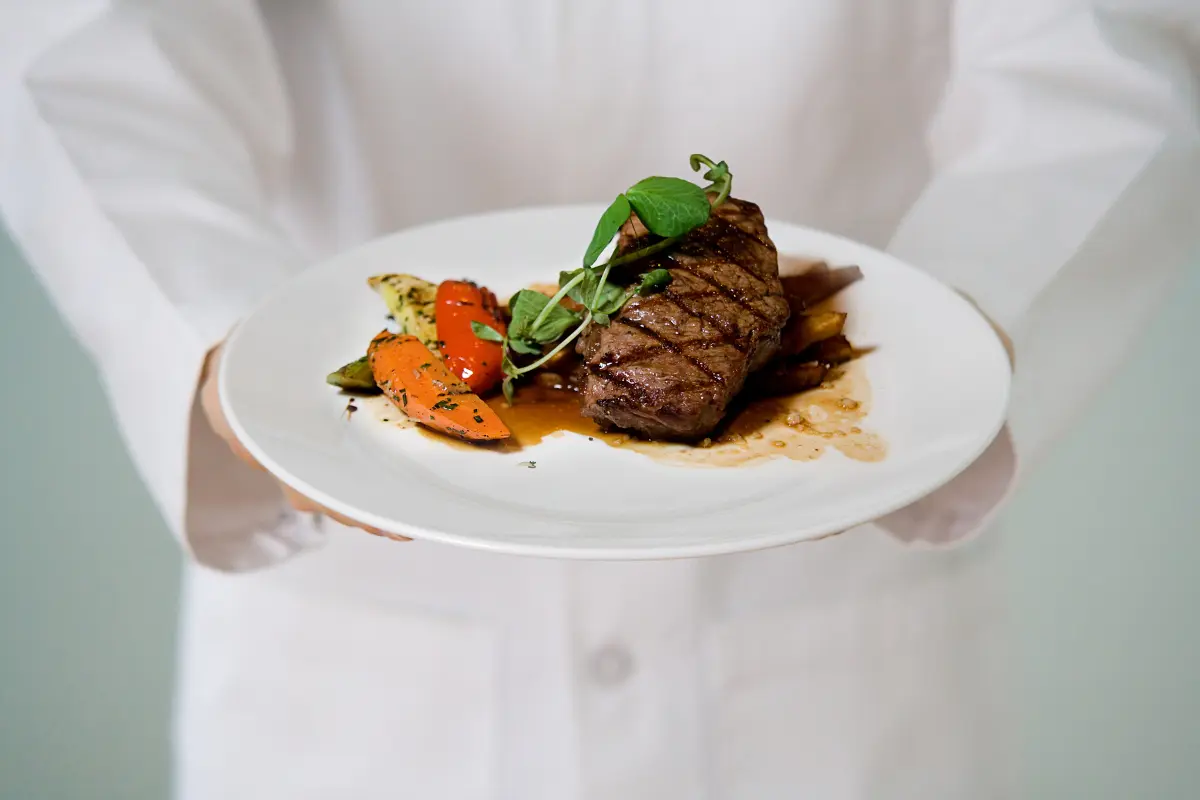
A Google review from December 2025 describes a different version of the same argument at French Diner in New York City. According to the reviewer, she and her boyfriend had been coming to the restaurant for their anniversary for three years.
On this occasion, they arrived before opening, put their names down, and eventually waited about two hours to be seated.
They ordered a $29 octopus dish and a $45 hanger steak. That’s $74 of food for two people.
According to the review, the manager or owner then approached the table and told them that the amount they were spending wasn’t enough for a Saturday night.
The reviewer said they explained that they couldn’t afford to order more. She claims they were then told that if they couldn’t spend more, they would have to leave.
The original Google review is also reproduced on Foodeist, where the reviewer titled her complaint very simply: “KICKED OUT FOR NOT ORDERING ENOUGH.”
She added that they had ordered the exact same combination on previous visits without having a problem.
Again, this is a customer review rather than an independently verified news report, and I haven’t found a public response from the restaurant addressing this specific allegation.
Then Saint-Tropez Took the Question to a Completely Different Level – The Mayor Got Involved
A much more extensively reported controversy emerged in Saint-Tropez, France, in 2023.
According to The Guardian, some restaurants in the famous French resort were accused of screening customers according to how much they had spent during previous visits.
Restaurants reportedly kept records of previous bills and tips and checked those records when customers tried to make another reservation. If someone hadn’t spent enough previously, the accusation was that the restaurant might simply tell them there were no tables available.
There were also reports of much higher minimum-spend expectations. One customer described being told that a table was available with a €5,000 minimum spend. Another account mentioned €1,500 per person.
This time, the controversy didn’t remain limited to customer reviews and online comments.
Saint-Tropez mayor Sylvie Siri became involved.
She publicly condemned the reported practices and told local media that the accusations were, unfortunately, true. She said the behavior was damaging the town’s image and warned that establishments engaging in such practices could face sanctions.
The Saint-Tropez situation isn’t identical to the pancake or tiramisu incidents, but the central question is similar: how much must someone be willing to spend before a restaurant considers them worth seating? An answer would be that it varies – depending on time of the year, time of day, day of the week, and the destination.
A Café in Spain Put the Minimum Spend on a Sign
Then there is another case from Spain, a little bit different. In April 2026, the Spanish hospitality account Soy Camarero shared a photo of a sign reportedly displayed at a café or ice-cream shop in Aranjuez, near Madrid.
The rule was quite specific.
Customers who wanted to join two tables had to spend at least €25.
If they wanted to join three tables, the minimum increased to €35.
The sign also asked customers to ask staff for permission before moving the tables. The photo spread widely online and was covered by Spanish media, including La Razón.
Some people thought the requirement was excessive. Others defended the business, pointing out that larger groups taking several tables occupy considerably more terrace space.
But there is an important difference between this example and the earlier cases.
The rule was written down.
Customers could see the condition before moving the tables and decide whether they accepted it. They might dislike it. They might decide to spend their money somewhere else. But they weren’t being seated, ordering something from the menu and then discovering that the restaurant had another spending requirement they hadn’t known about.
Can a Restaurant Ask You to Leave for Not Ordering Enough?
I can understand why restaurants think about tables very differently during their busiest hours.
A restaurant has a limited number of seats. It has employees to pay, food costs, rent and a relatively small number of hours during lunch or dinner when most of its revenue is made.
Four people ordering four desserts can bring in much less money than four people ordering appetizers, main courses, drinks, and dessert while occupying exactly the same table for a similar amount of time.
But I can understand the customer’s side just as easily.
If you enter a restaurant, the staff seats you, hands you a menu, and that menu includes pancakes, tiramisu, coffee, or another item you want, how are you supposed to know that ordering it isn’t enough?
And what exactly is enough?
Is €28 too little for four people?
Would €50 be acceptable?
Does everyone at the table have to order a main course?
If two people spend $74, as the New York reviewer said they did, can the restaurant still decide that the table should be generating more money?
Does your answer change if it’s 8 p.m. on a Saturday, every table is occupied, and another 20 people are waiting outside?
For me, there is a big difference between a restaurant having a clearly stated policy and customers discovering an unwritten one only after sitting down.
If a restaurant wants to reserve its dinner tables for people ordering full meals, it can tell customers that before seating them. If there is a minimum spend, it can display that too. Then the customer can decide whether to stay. Being told that your order isn’t valuable enough only after you’ve waited for a table, sat down, and ordered is a very different situation – an unpleasant one (for both sides, as I guess).
What Do You Think?
People were already divided in the discussions surrounding these incidents, and I can see why.
If four people occupy a table in a packed restaurant during dinner and order four €7 desserts, should the restaurant be able to ask them to leave?
Would your answer change if the restaurant had told them before they sat down that tables were reserved for full meals during dinner hours?
What about the Rimini family who says they ordered six tiramisus?
And where would you draw the line in the New York case, where two customers say $74 worth of food still wasn’t considered enough?
I’m curious what you would have done in any of these situations – and whether you think the restaurant or the customers were in the right.
Can a Restaurant Ask You to Leave for Not Ordering Enough? FAQs
Can you go to a restaurant and order only dessert?
Often, yes, but it depends on the restaurant and the time of day. A place may be perfectly happy to serve customers who only want dessert in the afternoon, for example, while keeping dinner tables for people ordering a full meal later in the evening. If dessert-only orders aren’t accepted at certain times, customers should be told before they sit down and order.
Can a restaurant ask you to leave if you don’t order enough?
There isn’t one answer that applies everywhere because restaurant rules and consumer laws differ from one country to another. The bigger issue in cases like the ones discussed in this article is when the customer learns about the requirement. Being told about a minimum order before taking the table is very different from being seated, ordering from the menu, and then being told that the order isn’t considered sufficient.
Can a restaurant require a minimum spend?
Some restaurants do set minimum-spend requirements, especially for large groups, high-demand tables, busy periods, or special events. The amount can vary considerably. What customers need to know is whether such a condition applies before they order, so they can decide whether they want to stay or choose another restaurant.
Do you have to order a main course at a restaurant?
Not always. Many restaurants allow customers to order starters, side dishes, dessert, drinks, or a combination of smaller items instead of a main course. A restaurant may have different rules during peak meal times, however, or may require a full meal for certain reservations, menus, or seating areas.
Can a restaurant set a minimum order per person?
Yes, some restaurants use a minimum order or minimum spend per guest rather than one amount for the entire table. This is more common for group reservations, fixed-menu dining, private areas, or tables that are in particularly high demand. Customers should check the booking conditions or ask before ordering if the restaurant mentions a minimum spend.
More amazing articles for you:

Violeta-Loredana Pascal is a communications expert, business mentor, and the founder of Earth’s Attractions and PRwave INTERNATIONAL. A pioneer in the Romanian digital PR landscape since 2005, she holds a degree in Communication and Social Sciences from SNSPA Bucharest. Violeta is a senior trainer at AcademiadeAfaceri.ro, where she leverages over 20 years of experience to teach professional courses in PR strategy and workplace productivity. By blending high-level business consulting with a passion for holistic travel and wellness, she empowers solopreneurs to overcome procrastination, build profitable brands, and design a life of purposeful adventure.