コロラド対ジョージア工科大学
CAIRO/ZANZIBAR — EgyptAir has opened a new direct link between Cairo and Zanzibar as the Egyptian flag carrier pushes deeper into Africa, joining a broader drive by African airlines to capture more of the continent’s trade, tourism and connecting traffic rather than surrendering much of it to hubs outside Africa.
The new Cairo-Zanzibar service operates twice weekly, on Fridays and Sundays, using Boeing 737 MAX 8 aircraft. EgyptAir said the inaugural flight achieved a load factor of more than 90%, an encouraging opening for a route combining Zanzibar’s tourism market with Cairo’s increasingly important role as a gateway between Africa, Europe and the Middle East.
EgyptAir Holding Company Chairman Ahmed Adel said the service forms part of plans to add more destinations across Africa and give passengers additional travel options.
The Zanzibar expansion is significant beyond the addition of another holiday destination.
EgyptAir is effectively betting that Cairo can capture a larger share of passengers travelling not only between Egypt and East Africa, but between African cities and destinations in Europe, the Middle East and potentially farther afield.
That strategy will become more visible when EgyptAir opens its new Cairo-Birmingham route on October 27. The British service is scheduled four times weekly and will make Birmingham the airline’s third UK destination after London and Manchester.

The combination illustrates the hub strategy: a passenger originating in Britain or elsewhere in Europe can travel into Cairo and continue south into Africa, while African passengers can use Cairo to reach European and Middle Eastern markets.
For Zanzibar, the implications are substantial. The Tanzanian island already receives international services from carriers including Ethiopian Airlines, Kenya Airways, RwandAir, Turkish Airlines, Qatar Airways and other international operators. EgyptAir adds another northern gateway and potentially another stream of European and Middle Eastern tourists.
Africa’s airlines are building their own connecting hubs
EgyptAir is not alone.
Across the continent, African carriers are adding routes, increasing frequencies and signing partnerships intended to make African hubs more useful for journeys both within Africa and beyond it.
Ethiopian Airlines, already the continent’s most developed connecting carrier, launched a three-times-weekly Addis Ababa-Mauritius service in July 2026. The airline explicitly markets Addis Ababa as the connection point through which Mauritius passengers can reach destinations elsewhere in Africa as well as Europe, Asia, the Middle East and the Americas.
Its expansion goes deeper than Mauritius. Ethiopian has added Nacala in Mozambique and is increasing frequencies on a number of African routes. Current schedule filings include plans for Addis Ababa-Bujumbura to rise eventually to twice daily and Addis Ababa-Kinshasa to reach three daily services from December, while Port Harcourt in Nigeria is scheduled to return to the network.
This is the network effect African aviation has historically struggled to achieve: several African cities feeding passengers into an African hub, which can then support long-haul flights that individual city pairs might not sustain independently.
RwandAir is pursuing a similar strategy on a smaller scale. Its Kigali-Zanzibar-Mombasa operation, introduced in December 2025, gave the Rwandan carrier stronger access to East Africa’s Indian Ocean tourism market. The four-times-weekly service marked RwandAir’s return to Mombasa and its entry into Zanzibar.
More importantly, RwandAir and EgyptAir announced a codeshare and interline partnership in June 2026. It allows RwandAir customers to access Cairo, Rome and Amman through the partnership, creating another example of African airlines using one another’s networks rather than relying exclusively on non-African carriers for onward connections.
Kenya Airways is also strengthening Nairobi’s role as an African interchange point. In March, it signed an interline agreement with South Africa’s CemAir, giving Kenya Airways passengers access through Johannesburg and Cape Town to destinations including Bloemfontein, Hoedspruit and Kimberley as well as regional points such as Maun, Victoria Falls and Harare. CemAir passengers, in turn, gain connections to 15 Kenya Airways destinations across Africa.
At the other end of the network, Kenya Airways has expanded its reach in North America through a 2026 codeshare with JetBlue. Passengers arriving at New York JFK can connect under the arrangement to US cities including Los Angeles, Chicago, Orlando, San Francisco, Atlanta and Phoenix.
The model is increasingly clear: African regional routes feed African hubs, and those hubs feed the world.
West Africa joins the push
Nigeria’s Air Peace is attempting something comparable from Lagos.
From April 2026, the carrier expanded its West African schedules linking Lagos with Abidjan, Dakar, Banjul, Accra, Monrovia and Freetown. These routes create considerably more than point-to-point journeys. They allow cities in the sub-region to feed traffic into Lagos while establishing links between West African capitals themselves.
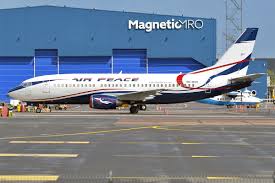
Air Peace’s network now combines regional destinations such as Accra, Abidjan, Dakar, Monrovia, Freetown, Banjul, Cotonou, Douala and Lomé with longer-haul destinations including London, Johannesburg, Jeddah and Mumbai.
It has even reopened a direct West Africa-Caribbean bridge, operating monthly Lagos-Antigua-Barbados flights from May 2026, aimed partly at tourism and diaspora traffic.
Royal Air Maroc is meanwhile building Casablanca into an increasingly ambitious Atlantic-facing hub. The Moroccan carrier says its summer 2026 programme provides nearly 8.2 million seats, 23% more than the previous summer, across 86 international destinations in Africa, Europe, the Americas, Asia and the Middle East. It also opened Casablanca-Los Angeles in June, creating what the airline described as the first direct air connection between Africa and the US Pacific coast.
Taken together, Cairo, Addis Ababa, Nairobi, Kigali, Lagos and Casablanca increasingly resemble competing — and potentially complementary — gateways for a more connected African aviation market.
Why intra-African routes matter for trade
The commercial argument extends far beyond passenger tourism.
Air transport contributes about $75 billion to African GDP and supports approximately 8.1 million jobs, according to IATA.
Better intra-African air links can shorten business journeys, accelerate movement of high-value and time-sensitive cargo, support conferences and investment, connect exporters to international supply chains and make regional tourism packages easier to sell.
That becomes especially relevant as the African Continental Free Trade Area seeks to increase commerce between African economies.
Goods cannot move freely in any meaningful economic sense if businesspeople, investors, technicians and high-value cargo cannot move efficiently as well.
Yet Africa still has an unusual connectivity problem. In many cases it remains easier to fly from an African city to Europe or the Gulf than between two African cities.
The UN Economic Commission for Africa said in a May 2026 policy brief that liberalizing African air transport could improve connectivity, trade, tourism and economic growth, while warning that regulatory, institutional and infrastructure barriers continue to hold the market back.
AFRAA data similarly show that the opportunity remains underdeveloped. Its analysis of major routes found substantially greater traffic in domestic and intercontinental markets than on intra-African routes, demonstrating how much room remains for continental aviation to grow.
Reducing dependence on foreign hubs
There is also a strategic dimension.
For decades, a considerable portion of African international connectivity has depended on hubs outside the continent. European gateways historically played this role, while Doha, Dubai, Abu Dhabi and Istanbul have become powerful transfer points connecting African cities with Asia, Europe and the Americas.
Those airlines and hubs have brought enormous benefits to African travellers, including frequencies and global destinations that many African carriers could not independently provide.
But excessive reliance on external hubs also has disadvantages.
A journey between two African markets can sometimes be commercially channelled through a non-African hub, meaning ticket revenue, connecting passenger spending, aviation employment and part of the wider economic value created by the journey leave the continent.
There is also a resilience question.
Geopolitical crises affecting Middle Eastern airspace can disrupt routes, raise fuel consumption as aircraft divert around closed or risky airspace, increase insurance and operating costs and destabilise schedules.
The African Travel and Tourism Association highlighted that risk in its 2026 aviation outlook, arguing that geopolitical disruption in the Gulf could increase the strategic importance of African hubs including Addis Ababa, Nairobi and Johannesburg, with Casablanca also positioned to become increasingly important as an alternative gateway.
That does not mean African airlines should retreat from partnerships with Gulf carriers.
The opposite may be commercially wiser.
Air Peace has a bilateral interline agreement with Emirates, while Kenya Airways has developed a codeshare partnership with Qatar Airways. Such agreements demonstrate that aviation independence does not have to mean isolation.
The stronger strategy may be to ensure African airlines have enough scale and connectivity to negotiate as partners rather than functioning mainly as feeders into foreign hubs.
Cairo’s geographical advantage
EgyptAir occupies an unusual position in this competition.
Cairo sits at the intersection of Africa, the Middle East and the Mediterranean. Unlike Addis Ababa or Nairobi, it is geographically close to Europe and the Levant while still being located on the African continent.
That makes a route such as Cairo-Zanzibar more strategically interesting than its twice-weekly frequency might initially suggest.
A passenger could potentially enter the EgyptAir network from Europe, connect through Cairo and continue to East Africa. Conversely, passengers originating in Zanzibar and surrounding markets can travel north to Cairo before connecting into EgyptAir’s European, Middle Eastern and other international network.
The forthcoming Birmingham service strengthens precisely that proposition.
Cairo’s importance is already visible in continental aviation statistics. AFRAA’s latest connectivity analysis identified Cairo International as the only airport appearing among the leading hubs across domestic, intra-African and intercontinental connectivity categories.
But expanding in Africa is not automatically profitable
The strategic argument is compelling. The economics are more complicated.
Opening routes simply for reasons of national prestige has historically been dangerous for airlines.
Aircraft are expensive. Fuel is expensive. Foreign exchange shortages affect several African markets. Airport charges and taxes can make fares prohibitively high. Visa restrictions suppress spontaneous travel. Bilateral aviation rules can limit frequencies and competition, while weak connecting schedules can turn theoretically useful networks into impractical ones.
A route operating with half-empty aircraft does not become strategically valuable merely because it connects two African countries.
Nor can every African airline realistically become a global super-connector.
Ethiopian Airlines has spent decades constructing the fleet, schedules, maintenance capability, cargo business and Addis Ababa hub necessary for its model. Replicating that system requires capital and consistent management, not simply announcing more destinations.
The continent therefore risks creating too much capacity if governments and airlines pursue overlapping hub ambitions without sufficient underlying demand.
There is another challenge: international competitors are not standing still. Gulf, European and Turkish carriers possess large fleets, established global distribution networks, frequent services and enormous connecting systems. African carriers must compete on schedule, price and reliability, not geography alone.
The case for expansion is nevertheless becoming stronger
Despite those risks, the timing for selective African expansion appears increasingly favourable.
International seat capacity serving Africa is rising sharply. The African Travel and Tourism Association’s 2026 outlook, drawing on OAG, IATA and UN Tourism data, projected strong growth and identified Egypt, South Africa, Morocco, Ethiopia and Kenya among the markets driving expansion.
AFRAA also reported that intra-African connectivity reached new highs during 2025, although the scale of connectivity remains highly uneven between hubs. Addis Ababa stands particularly strongly, followed by other major gateways including Johannesburg, Nairobi, Cairo, Casablanca and Abidjan.
West and Central Africa have also introduced Free Route Airspace, allowing airlines greater flexibility to select efficient flight paths rather than remaining tied to traditional fixed routes. AFRAA says the system can reduce flight time, fuel consumption and emissions.
The missing piece remains faster implementation of the Single African Air Transport Market, designed to liberalise aviation between participating African states.
If governments reduce regulatory barriers while airports improve infrastructure and airlines coordinate schedules and partnerships, the economics of routes that currently appear marginal could change substantially.
An African network rather than isolated national airlines
That may ultimately be the more important lesson from EgyptAir’s Zanzibar route.