コロラド対ジョージア工科大学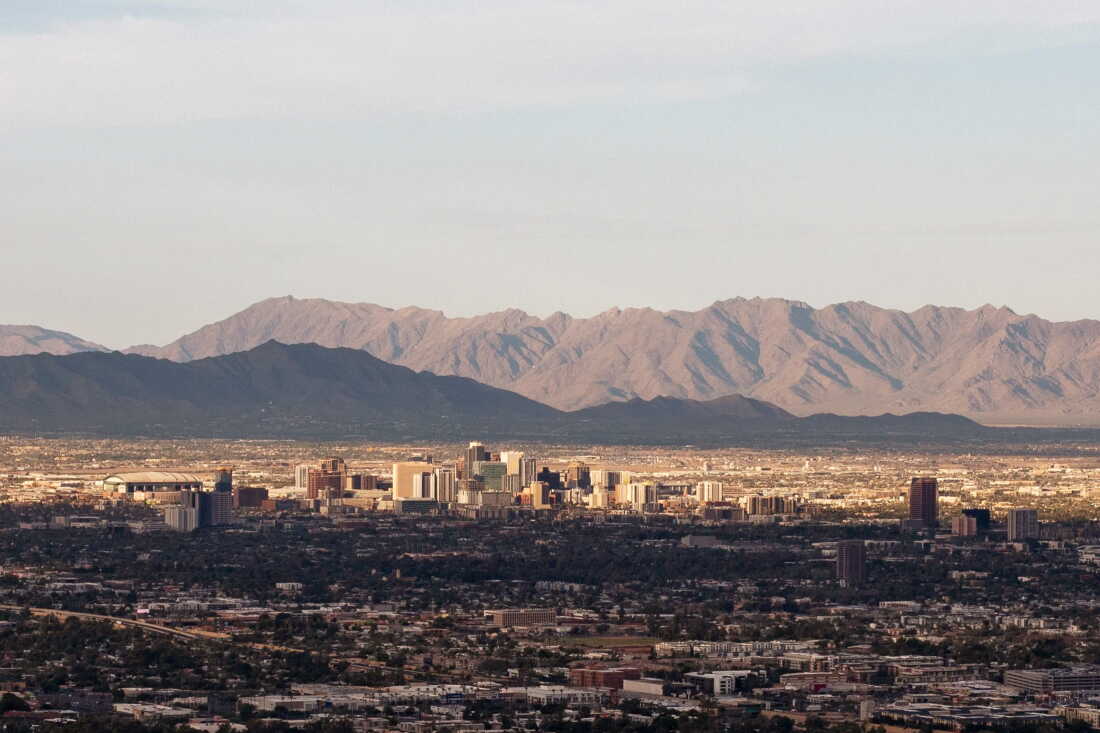

Arizona is at the heart of the country’s heat crisis. Hundreds of people in the state die from heat-related causes every year. Some of those most at risk live in manufactured homes.
Ryan Kellman/NPR
hide caption
toggle caption
Ryan Kellman/NPR
An NPR investigation finds that heat kills thousands of Americans every year. But official records radically undercount the toll. In this series, we are bringing you stories that reveal why this happens and what can be done.
Heat kills thousands of people across the U.S. every year. But not everyone faces the same risk. Some of those most in danger are the millions of Americans who live in manufactured housing like mobile homes and trailers.
That’s not news to many mobile home residents. But research and policy are only recently catching up to that reality.
Patricia Solis discovered it almost by accident.

Solis is a geographer at Arizona State University, which means she uses maps to sleuth out patterns that might otherwise be invisible.
In 2018, she was brand new to ASU and tasked with finding solutions to one of Arizona’s most pressing problems: how to keep its residents from dying in the state’s ever-increasing heat.
Arizona regularly records hundreds of heat-related deaths each year, and state officials acknowledge the number might be even higher.
In Maricopa County alone, home to Phoenix and where ASU is based, the number of heat-linked deaths consistently exceeds the entire annual toll across the U.S. from weather disasters like hurricanes, floods and tornadoes.
“That amount of casualties every single year, it just is too many,” Solis says. “It becomes a crisis. And that’s really what we were feeling as a community.”

Phoenix and Tucson are both surrounded by the Sonoran Desert, and climate change is making a hot region even hotter. Cities like Phoenix have started implementing efforts to protect their residents, like allowing construction to start at 5am during the summer to avoid heavy physical labor during the hottest parts of the day.
Ryan Kellman/NPR
hide caption
toggle caption
Ryan Kellman/NPR
Solis wanted to understand who was most at risk, and why. So she did what she is trained to do, as a geographer: She went to the maps.

Soon after she was hired, she gathered a group of similarly motivated people — researchers, county officials, state public health officers and more — in a big room on ASU’s campus.
Up on a big screen, Solis projected a map of the Phoenix area. She then overlaid it with a map of all the heat-related deaths in the region, each represented by a little white dot.
Then she added one more layer of data — where people were getting help paying their electric bills each summer, from public programs or local organizations.
An obvious pattern emerged. There were big clusters of dots collected in certain areas: lots of deaths, and little assistance.
Those clusters turned out to be mobile home parks.
Solis and colleagues ultimately figured out that mobile home residents in Maricopa County are some six to eight times more likely to die from heat-related issues than residents in traditional housing.
They are among the thousands of people dying from heat in the U.S. every year.
A new investigation from NPR and Boston University finds that roughly 9,000 Americans die from heat-related causes each year — more than five times what federal statistics show.

Paul Valdez and his dog, Gunner, sit in the shade outside his home in Tucson, Arizona. The electricity in Valdez’s mobile home park has gone off for hours at at time during the hottest parts of the year. Valdez is diabetic, and he worries about heat exposure.
Ryan Kellman/NPR
hide caption
toggle caption
Ryan Kellman/NPR
And a growing body of evidence points to manufactured housing as a major risk factor across the country.
The reasons are complicated, including the age and condition of most manufactured housing stock, how it is financed, and the fact that people living in these homes are more likely to be dealing with other financial and health issues.
“Some of us are experiencing heat as an inconvenience,” says Karina Martinez, who works on the city of Tucson’s heat team. “But then for a lot of other people, it’s just a catastrophe. Heat is a catastrophe.”
One of those people was Sheri Petty.

Tara Gentner pulls up a picture with her mother, Sheri Petty. Gentner lived with her mother last summer when their air conditioners and swamp cooler broke. Petty died from the subsequent heat exposure.
Ryan Kellman/NPR
hide caption
toggle caption
Ryan Kellman/NPR
“Her body temperature was 106 degrees”
Sheri Petty was the kind of person everyone relied on. The one who drove a friend’s son to doctors’ appointments when their car was on the fritz. The one who showed up to choir practice every week. The host who piled the Thanksgiving table high, even though she didn’t have much money.
She lived with her daughter, Tara Gentner, and Tara’s daughter in a blue trailer on the outskirts of Tucson. The house was small, but the location was beautiful, Gentner says: an acre, dotted with spare but graceful trees.
“You know, the perfect desert setting,” she says. “My daughter had a swing set in the yard.”
But that desert setting could get very hot, especially as human-caused climate change makes southern Arizona heat waves longer, hotter and more frequent. Tucson experiences about twice as many hot nights now as it did in the 1990s, when Petty moved to her trailer.
And staying cool costs money. Gentner and Petty had window AC units in their bedrooms and a swamp cooler in the living room, but it was hard to pay the electric bills to keep them running.
Last July, Tucson saw a long stretch of 100+ degree days. In the middle of it, the air conditioner in Petty’s bedroom broke down. A few days later, their swamp cooler stopped working.
Petty called around to several county and private programs for help fixing the cooler. But none of those free or low-cost services could come, and she couldn’t afford to pay for repairs on her own.
So she and Gentner toughed it out.

Tara Gentner stands next to the car she inherited from her mother, Sheri Petty. Petty died last summer after exposure to extreme heat. Gentner found her mother passed out on the floor of their manufactured home in sweltering July temperatures.
Ryan Kellman/NPR
hide caption
toggle caption
Ryan Kellman/NPR
“OK, well, we’re used to the heat. We’re in Arizona, right?” Gentner says ruefully.
But even for people who are used to heat, long stretches of it can be particularly dangerous. The risks are especially pronounced for older people and those with conditions like diabetes or heart disease.
Petty checked all those boxes.
One morning last July, Gentner woke up covered in sweat. She went into the kitchen to get a drink. And then she saw her mom.
“My mom’s lying there on the floor in front of a swamp cooler,” Gentner says. “And it’s blowing hot air.”
It was hotter inside the trailer than outside. When paramedics arrived to help, Gentner says they were alarmed, too: “First thing they said: Why is it so freakin’ hot in here?”
Petty had gone into cardiac arrest triggered by heatstroke. Her body temperature was 106 degrees, Gentner says.
Sheri Petty died at the hospital later that day. She was 76 years old.

Roughly a third of the manufactured housing in Pima County was built before 1976, when federal rules updated requirements for such homes to be built more robustly, with an eye toward energy efficiency. Those pre-1976 homes are often in poor condition today, with little insulation and rickety electrical wiring, making it challenging to keep them cool.
Ryan Kellman/NPR
hide caption
toggle caption
Ryan Kellman/NPR
“Stuck in a tin can”
Sheri Petty’s story isn’t an outlier.
An analysis from NPR and Boston University shows that Pima County, where Petty lived, deals with one of the highest per-capita rates of heat-related deaths in the nation.
Some of that is likely due to the nature of its housing stock.
Roughly 10% of Pima County‘s housing is manufactured — a higher proportion than in other major cities in the West. Overall, manufactured housing is home to about 100,000 people in the county.
More than a third of those homes are 50 years old, or even older. They were built before 1976, when the federal government enacted stricter building codes for such homes, requiring things like safer wiring and better insulation.

Paul Valdez has many strategies to keep his home cool, like keeping windows drawn most of the time. But there’s little he can do if the power goes out.
Ryan Kellman/NPR
hide caption
toggle caption
Ryan Kellman/NPR

Residents in Valdez’s mobile home park have struggled with unplanned power outages. When the power cuts out, their air conditioners don’t work. Even when the power is on, running an AC can be prohibitively expensive. Valdez has tried to add some shade to the outside of his home to keep it cooler.
Ryan Kellman/NPR
hide caption
toggle caption
Ryan Kellman/NPR
Those older homes make up much of the stock across the country. Many are in poor shape, with thin, uninsulated walls, leaky windows, old or broken swamp coolers and electrical systems that can’t always handle air conditioners.
That’s not a foregone conclusion, says Mark Kear, a geographer at the University of Arizona. Manufactured housing produced after 1976 — and especially some of the more recent builds — can be even more energy efficient than traditional homes, he says.
But older units were “not designed for the extremes of the U.S. climate, whether or not we’re talking about somewhere up in Maine or down here in the summer months in Arizona,” Kear says.
Location matters, too. Many mobile homes sit in asphalt-lined communities or in neighborhoods with little shade or green space. So they bake in hotter temperatures.
It’s like some families are “basically stuck in a tin can,” says Martinez, the Tucson heat specialist.

Manufactured homes are often found in heavily paved parts of cities like Phoenix and Tucson. Asphalt and pavement can increase local temperatures, and with fewer trees to provide shade, heat exposure can be intense.
Ryan Kellman/NPR
hide caption
toggle caption
Ryan Kellman/NPR
“Exorbitant” electricity bills
The poor condition of many homes, along with sometimes opaque billing practices unique to mobile home parks, can contribute to sky-high electric bills.
As a graduate student, Martinez interviewed dozens of families living in Pima County’s mobile homes.
Over and over, people told her they couldn’t afford to run their coolers, even if they had them.
One man, she said, would instead buy a bag of ice at the end of his shift, dump it in the tub, and sit in an ice bath all evening to cool down.
Mobile home residents are often ineligible for help paying those electric bills. Sometimes that’s because a mobile home park is “master metered:” the park itself gets the utility bill, not the individual units.
Pat Schoneck, the former regional lead of the Arizona Association of Manufactured Home Owners, heard similar concerns: bills in the hundreds or even thousands of dollars.
Residents would come to her distraught when repair estimates for their cooling systems topped their annual rent.
Such sums are crushing for many residents, she says: simply unpayable.
So people end up trying to tough it out, like Petty and Gentner.

Alicia Waldo lost her granddaughter, Brittany Donovan, in August 2025. Donovan lived in a mobile home that was in poor condition and challenging to keep cool. She would often come over to Waldo’s home to cool off, but couldn’t in the days preceding her death. Temperatures that week were well above 100 degrees.
Ryan Kellman/NPR
hide caption
toggle caption
Ryan Kellman/NPR
Complicated ownership
Another challenge is the complicated ownership structure of many manufactured homes.

While residents may own the home, the land beneath is often owned by someone else — often someone who owns the whole manufactured home community (increasingly, that owner is a private equity firm).
That setup, in which the land is owned separately from the home, makes the home ineligible for a traditional mortgage and disincentivizes residents from making major investments and fixing problems like insulation.
Fewer lenders will provide such loans, and often at higher rates than for traditional houses, says Kear, the University of Arizona geographer. Those constraints also make it more challenging for owners to borrow against their home, as other homeowners might in a pinch.
It also means residents are at the mercy of their landlord and park management.
Paul Valdez has lived in his neat, brown single-wide trailer in South Tucson for some 30 years. His mobile home park is, like many across the county, aging. The power to the whole park has shut down for hours at a time, sometimes several times a day, with temperatures in the hundreds.
Valdez would resort to running the air conditioner in his car.
“We would just leave, get the dog and go get in the car and, you know, just go riding around with AC,” he says. “But you shouldn’t have to do that. It’s crazy.”
His neighbor, Miryam Palafox, had a newborn last summer. Once, when the power went out overnight, she brought the baby and her two other daughters into the car and left it running with the AC on, just to make sure they all survived the night.
In 2024, Valdez ended up in the hospital for extreme dehydration. He survived the scare. But he knows that the outcome could have been very different.
“I didn’t realize at the time that it was a problem,” he says. But after an experience like that, “you know damn well the heat is a major issue.”

Brittany Donovan died in her sweltering hot mobile home in August 2025. She left behind her husband, Chris, and a menagerie of adopted pets she loved like children.
Ryan Kellman/NPR
hide caption
toggle caption
Ryan Kellman/NPR
Potential solutions
Officials across Arizona are now aware of the heightened risks for residents of manufactured homes. They have started to take steps in recent years to address that risk, but solving the problems isn’t easy.
Solis and colleagues heard from mobile home park residents that landlords were barring them from installing shade sails or window air conditioners in their homes. So they spearheaded an effort to legally allow such modifications.
Tucson and Pima County, along with many nonprofits, have programs to help residents upgrade their home’s insulation, electrical systems, and heating and cooling systems. Such programs can help mobile home residents skirt the challenges they face with private lenders.
But those programs are often oversubscribed, says Joel Viers, a housing rehabilitation specialist for Pima County.
There’s also education. Martinez, with the city of Tucson, organized door-knocking sessions in some of the most at-risk mobile home parks to raise awareness of heat risks and the resources available.
The seeds of solutions exist, says Solis. But those programs need to scale up dramatically.
Protecting residents will also require a conceptual shift, says Mark Kear.
“We think of climate change as a matter of the outdoors,” he says. “But paradoxically, we need to be much more concerned about those indoor, human-controlled environments.”
Tara Gentner understands that viscerally. She watched her mother succumb.
“Heatstroke does not just happen outside,” she says, her voice breaking. “It happens inside the home, too.”
This reporting was supported by a Nova Institute for Health Media Fellowship. It was also supported by the Dennis A. Hunt Fund for Health Journalism.
Edited by Rachel Waldholz and Sadie Babits