コロラド対ジョージア工科大学

September 7, 2026 6:19 PM
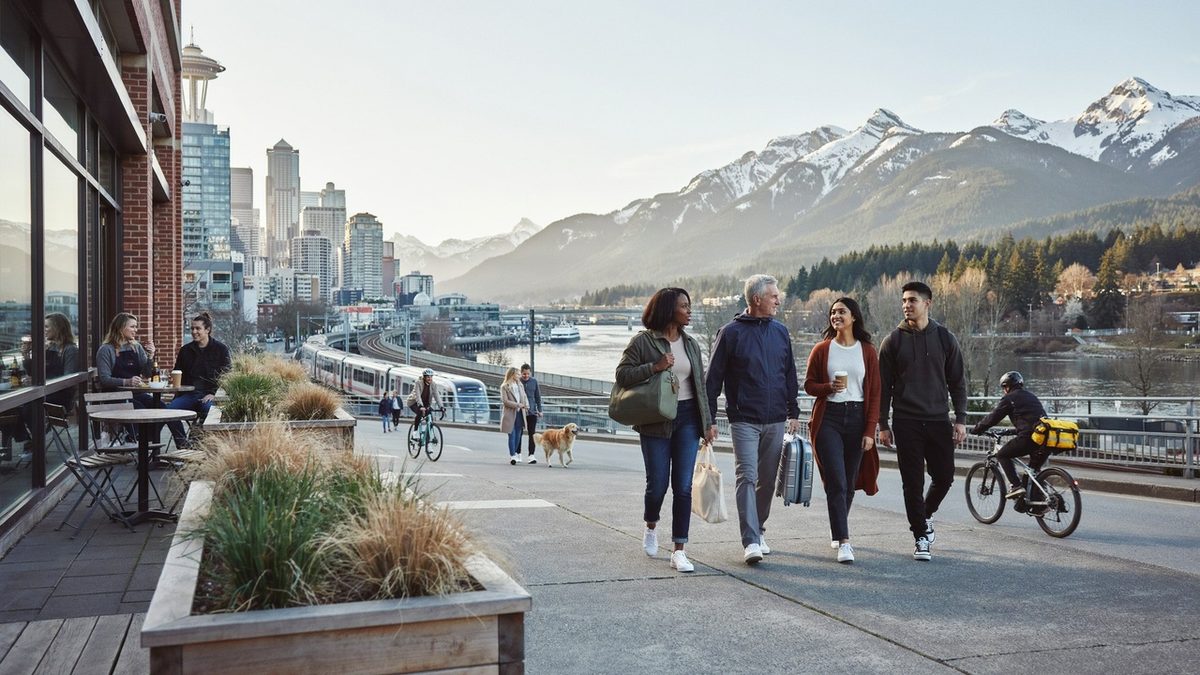
Image generated with Ai
Seattle, Salt Lake City and more US cities are winning as Americans prefer more from micro-vacations, choosing shorter, richer escapes that deliver value, variety and memorable experiences.
Seattle unites with Salt Lake City and more US cities as Americans increasingly prefer more from micro-vacations. Instead of spending heavily on long holidays, travellers are choosing shorter escapes with richer experiences. Moreover, these micro-vacations can combine food, culture, nature and entertainment within just a few days. As travel costs remain a consideration, cities offering convenient access and diverse attractions are gaining attention.
Therefore, destinations that deliver more experiences in less time are becoming increasingly attractive. From Seattle’s urban energy and nearby wilderness to Salt Lake City’s mountain access, the trend shows how Americans are reshaping travel around value, flexibility and memorable short breaks.
As Americans rethink how they spend on holidays, micro-vacations are becoming a practical alternative to longer breaks. Shorter trips allow travellers to leave home, experience a different destination and return without taking a full week away from work or committing to the cost of a traditional holiday.
Official state tourism organisations increasingly promote weekend itineraries, two-day experiences, quick trips and compact destination breaks. That makes several US cities particularly well suited to travellers seeking shorter holidays, especially those who want to combine culture, food, entertainment and outdoor experiences within a limited timeframe.
From Seattle and San Diego to Savannah and Salt Lake City, these ten cities demonstrate how a well-planned two- or three-day trip can deliver a substantial travel experience.
Micro-vacations offer a cheaper reset
Bank of America research shows that shorter “micro-vacations” are becoming an increasingly attractive option for American travellers. These brief trips can provide a break from everyday routines without carrying the financial commitment of a longer holiday.
The trend is particularly visible among younger travellers. About one in five Gen Z respondents said they planned to take shorter trips this year than they had in previous years.
For consumers facing higher everyday expenses, a shorter holiday can offer a practical compromise. Travellers can still experience a change of scenery while reducing spending on flights, accommodation, meals and other travel costs.
The shift also reflects a broader change in travel behaviour: Americans are becoming more selective about where and how long they travel rather than simply cancelling holidays.
Staying closer to home cuts travel costs
Domestic and regional travel is also benefiting from changing consumer priorities. More than half of Americans surveyed planned to remain closer to home, including travelling across state lines instead of booking more expensive long-haul flights.
That approach allows travellers to preserve the experience of taking a holiday while limiting one of the biggest expenses in many travel budgets: transportation.
Road trips and shorter domestic breaks can also make it easier for travellers to control costs. Instead of committing to a major international itinerary, consumers can choose destinations that are reachable by car or require shorter flights.
This could provide an important boost to domestic tourism destinations, particularly those that can attract visitors from neighbouring states.
Travel stacking turns events into holidays
Another trend highlighted by Bank of America is “travel stacking”. Rather than taking a separate holiday later, travellers are extending trips that were already planned around major events.
Concerts, weddings and sporting events can become the starting point for a longer destination experience. Nearly one-third of Americans travelling to live events chose to extend their stays so they could spend additional time exploring the destination.
The strategy makes financial sense for travellers who have already paid for transportation. Adding extra nights can be less expensive than arranging another trip from scratch.
The 2026 World Cup also helped drive summer travel activity, particularly during June and July, showing how major international sporting events can influence destination demand.
Seattle, Washington: City Experiences With Nature Close By
Seattle stands out for travellers who want an urban break without giving up access to nature. The city’s location between Puget Sound and the Cascade and Olympic mountain regions creates an unusual combination of city attractions and outdoor opportunities.
Visit Seattle provides itineraries designed around different trip lengths, including short stays. Travellers can explore Pike Place Market, the waterfront, museums, neighbourhoods and restaurants without needing a long itinerary.
The city also works as a base for quick excursions. Bainbridge Island, Snoqualmie and other nearby destinations can add a second dimension to a short holiday.
For travellers taking a micro-vacation, this flexibility matters. A weekend can focus entirely on Seattle, or visitors can combine the city with a nearby outdoor experience.
San Diego, California: Beaches, Food and Outdoor Attractions
San Diego offers one of the strongest combinations for a short coastal break.
California’s official tourism organisation highlights San Diego among the state’s major travel hubs, and the destination can accommodate different styles of short holidays. Visitors can spend a morning at the beach, explore Balboa Park, visit museums and finish the day in one of the city’s many dining districts.
The destination also benefits from a relatively compact collection of major visitor experiences. Travellers do not have to dedicate an entire holiday to one attraction.
For Americans seeking a reset rather than an extended holiday, San Diego provides the essential ingredients: sunshine, beaches, food, culture and outdoor recreation.
Salt Lake City, Utah: A Two-Day City and Mountain Escape
Salt Lake City is particularly well suited to travellers who want an urban break with immediate access to outdoor recreation.
Utah’s official tourism organisation includes Salt Lake City in its trip-planning guidance and provides itineraries designed around short stays. The city’s proximity to the Wasatch Mountains gives visitors the opportunity to combine restaurants, cultural attractions and city sightseeing with hiking and other outdoor activities.
This city-plus-nature model is increasingly relevant to micro-vacation travellers. Instead of choosing between an urban holiday and a wilderness escape, visitors can experience elements of both during one short trip.
That makes Salt Lake City especially attractive for travellers who have only a weekend available.
Chicago, Illinois: A High-Density Urban Micro-Vacation
Chicago is one of the easiest US destinations to fill with experiences during a short stay.
Architecture, museums, lakefront attractions, neighbourhood restaurants, sporting events, live entertainment and cultural institutions provide a broad choice without requiring visitors to travel long distances between every experience.
Illinois’ official tourism organisation also promotes weekend trips from Chicago to destinations around the state. That makes the city useful in two ways: it can serve as a standalone micro-vacation destination or as the starting point for a short regional escape.
For travellers prioritising variety, Chicago offers an unusually high concentration of attractions, making it possible to build a full itinerary within two or three days.
Savannah, Georgia: History and Food in a Walkable Setting
Savannah demonstrates why walkability is important for successful micro-vacations.
The city’s historic streets, squares, architecture, waterfront, restaurants and cultural attractions create an environment where visitors can experience a large part of the destination without spending much time travelling between sights.
For a short break, that is a significant advantage.
Travellers can arrive, explore the Historic District, experience Savannah’s culinary scene and spend time along the waterfront before moving on to additional attractions.
The destination also offers a distinctive sense of place. Historic architecture and Southern culture give visitors an experience that feels substantially different from a standard city weekend.
Charleston, South Carolina: A Compact Coastal Cultural Break
Charleston combines history, architecture, food and coastal experiences, making it another strong candidate for a short US holiday.
The city’s historic districts provide concentrated sightseeing opportunities, while its restaurants add a major culinary component to the experience.
Travellers can spend one day exploring historic streets and cultural attractions, another experiencing the city’s food scene and waterfront, and still have time to visit nearby coastal areas.
That combination reduces the pressure to create a complicated itinerary.
For micro-vacation travellers, Charleston’s appeal is therefore not simply its popularity. It is the ability to combine several travel interests within a relatively short stay.
Asheville, North Carolina: Arts, Food and the Mountains
Asheville offers a different micro-vacation formula by combining an independent urban culture with mountain scenery.
The city is known for its arts scene, restaurants, breweries, distinctive neighbourhoods and access to the Blue Ridge Mountains.
This makes it particularly useful for travellers who want their short break to include both relaxation and outdoor activity.
A two- or three-day itinerary can move between downtown experiences and mountain landscapes without requiring a traditional week-long holiday.
The destination’s character also helps distinguish it from larger US cities. Visitors can focus on local food, arts and outdoor experiences rather than trying to cover a huge list of conventional tourist attractions.
New Orleans, Louisiana: Music, Food and Culture
New Orleans can deliver a remarkably dense travel experience over a short period.
Music, cuisine, architecture, festivals, nightlife and cultural heritage are deeply integrated into the city. Visitors can experience multiple aspects of the destination during a single weekend.
The French Quarter remains a major draw, while neighbourhoods beyond the central tourist areas provide additional food, music and cultural experiences.
New Orleans is particularly suitable for travellers who define a holiday through experiences rather than sightseeing alone. A short stay can centre on food and music, history and architecture, or a mixture of all four.
For a micro-vacation, the city provides something important: a strong identity that can be experienced quickly.
Portland, Maine: A Small-City Coastal Escape
Portland demonstrates that a micro-vacation does not have to involve a major metropolitan destination.
Maine’s official tourism organisation promotes Portland as a destination suitable for a mini-vacation, with its restaurants, hotels, entertainment and Old Port area contributing to its appeal.
The city is particularly attractive for travellers who want a slower-paced break.
Visitors can explore the waterfront, dine on local seafood, browse shops and experience the city’s arts and cultural scene. Coastal attractions outside the centre can then provide additional options.
Its relatively manageable scale makes Portland well suited to a weekend itinerary where the objective is to experience a destination rather than spend much of the holiday navigating between attractions.
Anchorage, Alaska: A Quick Gateway to Wilderness
Anchorage is perhaps the most unconventional destination on this list because Alaska itself is associated with long, extensive holidays.
Yet Alaska’s official tourism organisation specifically promotes quick trips for visitors with limited time. Anchorage provides a particularly strong example of how a shorter holiday can still deliver an experience that feels substantial.
The city combines restaurants, museums and urban attractions with access to wildlife, trails, mountains and wilderness.
Travellers can therefore build a short itinerary around outdoor exploration without committing to a lengthy Alaskan expedition.
For Americans seeking something dramatically different from a conventional city break, Anchorage offers a powerful micro-vacation proposition.
Why Micro-Vacations Are Gaining Attention
The appeal of these destinations reflects a broader change in travel behaviour.
A traditional holiday can involve substantial spending on flights, accommodation, food and transportation. A micro-vacation allows travellers to control those costs by reducing the number of nights, choosing a closer destination or concentrating activities in one area.
The strategy can also make travel easier to fit around employment and family commitments.
Importantly, a shorter holiday does not necessarily mean a less meaningful holiday. A carefully selected city can offer history, cuisine, entertainment, nature and cultural experiences within a single weekend.
The best micro-vacation destinations are consequently those that reduce friction. Easy access, walkability, concentrated attractions, flexible accommodation and a strong local identity all contribute to the equation.
The City Break Is Becoming More Flexible
Seattle, San Diego, Salt Lake City, Chicago, Savannah, Charleston, Asheville, New Orleans, Portland and Anchorage represent ten different versions of the same emerging travel model.
Some are major metropolitan centres. Others are smaller coastal or mountain destinations. Some emphasise culture and food, while others offer immediate access to nature.
What connects them is their ability to deliver a substantial experience without requiring travellers to stay for a week.
As consumers become more deliberate about travel spending and available time, the micro-vacation could become an increasingly important part of the US tourism landscape. For destinations, the opportunity is equally significant: attracting a visitor for two or three nights may be more realistic than competing for a full-week holiday.
The strongest cities will be those that make a short visit feel complete — not rushed.
Americans are changing the way they travel as higher costs reshape summer holiday plans. Instead of abandoning trips altogether, many travellers are choosing shorter getaways, nearby destinations and strategic ways to stretch their travel budgets.
Higher fuel prices are changing spending habits
Rising fuel prices are creating another challenge for summer travellers, although their impact is far from uniform.
Bank of America found that 23% of respondents planned to reduce the number of trips they take because of higher costs. Meanwhile, 31% said fuel prices had not affected their travel plans.
Another 22% planned to reduce spending on accommodation and food to compensate for higher fuel expenses.
That suggests many Americans are not necessarily giving up travel. Instead, they are adjusting other parts of their holiday budgets to make the trip affordable.
For hotels, restaurants and tourism businesses, however, this behaviour could mean greater pressure to demonstrate value as travellers become more careful with discretionary spending.
Affordability remains the biggest barrier
Among Americans who were not travelling, affordability was the leading reason for staying home. Some 56% said they could not afford to travel at present.
Economic uncertainty was another factor, with 25% saying they were delaying major purchases. A further 20% simply said they did not enjoy travelling.
These figures underline the financial divide within the US travel market. While some consumers continue to spend on holidays and live events, others are postponing travel because household budgets remain under pressure.
Anup Kumar Keshan, Editor-in-Chief, TTW says,
“The rise of micro-vacations reflects a meaningful transformation in how Americans view travel. Seattle, Salt Lake City and other US cities are proving that a memorable holiday does not always require a long itinerary or substantial spending. Travellers increasingly want experiences that feel rewarding, convenient and purposeful, while destinations have an opportunity to showcase their strongest assets within a shorter timeframe. This trend can benefit both visitors and tourism businesses because it encourages more flexible travel and supports destinations beyond traditional peak holiday patterns. The key will be delivering authentic local experiences, easy access, strong hospitality and compelling reasons for visitors to extend their short breaks.”
Rewards are becoming part of the travel strategy
Financial rewards are also playing a bigger role in how Americans fund summer travel.
Around 46% of consumers planned to redeem rewards, including credit card points, banking loyalty benefits and other offers. Gen Z was particularly active, with 80% planning to use rewards, compared with 60% of millennials, 35% of Gen X and 19% of baby boomers.
Consumers are also paying attention to additional benefits when selecting financial products. Bank of America found that 37% considered enhanced credit card rewards bonuses important, while 30% valued personalised cash-back offers.
Enhanced fraud monitoring while travelling appealed to 28%, while 26% were interested in exclusive travel and premium-experience offers.
The US travel market is adapting
The latest consumer behaviour points to a travel market adapting rather than collapsing under higher costs. Americans are finding alternative ways to keep travelling, from micro-vacations and nearby road trips to travel stacking and rewards redemption.
The result could be a summer travel landscape where flexibility matters as much as destination choice. Travellers are shortening holidays, staying closer to home, extending event trips and cutting accommodation or food spending when necessary.
For the tourism industry, the message is clear: affordability, flexibility and added value are becoming increasingly important in persuading Americans to travel.
Seattle, Salt Lake City and more US cities are entering a powerful new phase as Americans prefer more from micro-vacations. Rather than abandoning travel because longer holidays can be expensive, many travellers are choosing shorter breaks that maximise every day. Consequently, cities with concentrated attractions, convenient transport, outdoor access, distinctive food and strong cultural identities have an advantage.
Seattle can combine city experiences with nature, while Salt Lake City connects urban attractions with mountain adventures. Similarly, other US cities can turn two or three nights into meaningful holidays. The cause is clear: travellers want better value, greater flexibility and memorable experiences without committing to lengthy trips. The answer is the micro-vacation. The reason is practical as well as emotional; people can reduce costs and time away while still enjoying a genuine change of scenery. Ultimately, this evolving preference could reshape how US destinations market, package and deliver short leisure travel.
https://www.visitutah.com/plan-your-trip
https://www.visitutah.com/plan-your-trip/recommended-itineraries
https://www.visitcalifornia.com/places-to-visit/san-diego
https://www.visitcalifornia.com/experience/faqs-everything-you-need-know-your-california-road-trip
https://www.enjoyillinois.com/plan-your-trip/travel-inspiration/weekend-trips-from-chicago
https://www.exploregeorgia.org/city/savannah
https://discoversouthcarolina.com/charleston
https://www.visitnc.com/destinations/asheville
https://www.explorelouisiana.com/cities/new-orleans
https://visitmaine.com/places-to-go/greater-portland-casco-bay/portland
https://www.travelalaska.com/explore-alaska/articles/quick-trips-to-alaska
https://www.travelalaska.com/destinations/cities-towns/anchorage
https://www.michigan.org/article/trip-idea/microadventures-michigan
https://institute.bankofamerica.com
Advertisement
Advertisement