コロラド対ジョージア工科大学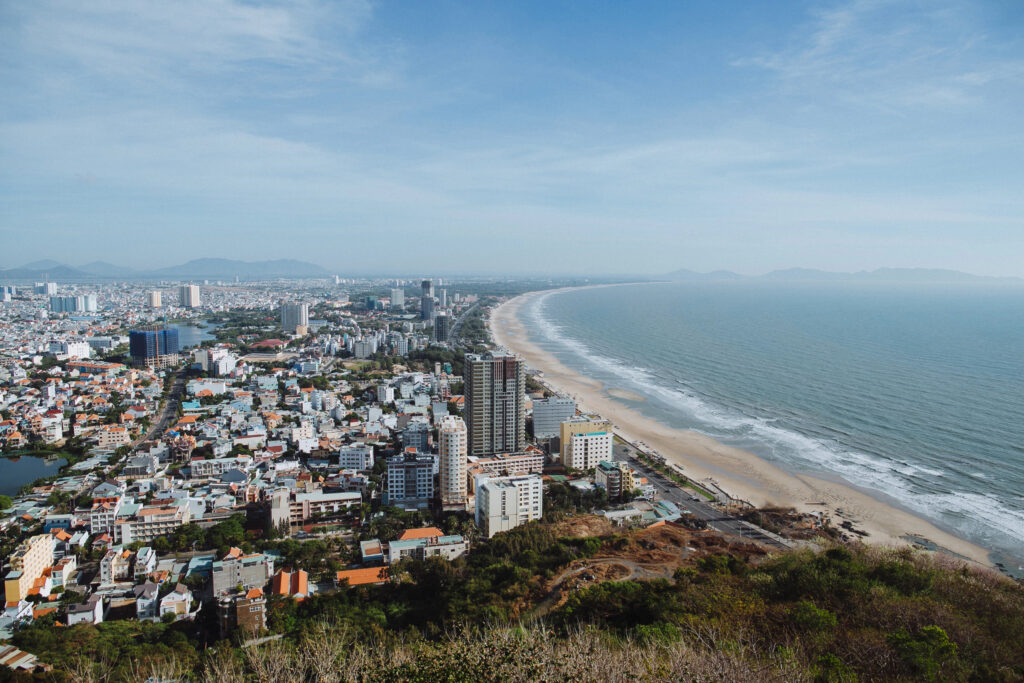
Vung Tau strikes a balance you don’t find much in Vietnam: laid-back beach town and booming city that’s distinctly Vietnamese.
It’s got amazing food, walkable neighbourhoods, and spectacular city-meets-sand-meets-blue sea activities. It’s clean and modern, but it also feels unfiltered and authentic. It’s sort of like a more compact, more culturally pure alternative to Da Nang.


I’ve mentioned Vung Tau in several of my Vietnam guides and I rank it among the best beach towns in Vietnam. I hear from plenty of short-term tourists that it was their favorite stop in the south of the country and the more time I spend here, the more I think it deserves more attention.
Worth knowing before you go: Vung Tau is the 7th most visited city in Vietnam, largely thanks to its popularity with domestic travellers. The city gets particularly busy on weekends, so if you can, I’d recommend visiting on a weekday when it feels considerably more relaxed.
In this post, I hope to capture some of Vung Tau’s beach city magic and set you up for a memorable 3-5 days there.
- Vung Tau as a day trip: If you’re short on time, Vung Tau also works as a day trip from Saigon – this package tour covers the beach, the Christ statue, and the colonial heritage sites in one go. It’s one of our favorite Saigon day trips.
- Staying 1 or more nights: I recommend a stay in The IMPERIAL Hotel ($$$), five-star luxury right on Back Beach, or The Song ($$), a fully loaded apartment building near the beach if you want more space for less. There are also many inexpensive backpacker hostels around if you’re on a budget.
How to get to Vung Tau
One of the most appealing aspects of a short detour to Vung Tau is its proximity to Saigon – just a few hours by road. The distance allows you to maximise your time enjoying the country rather than sitting in transit, which is an often-overlooked part of an enjoyable holiday.
My recommended platform for booking all the travel options below is 12go, the best site for cross-country bookings in Vietnam.
By bus (the cheapest way)
With the new Bien Hoa-Vung Tau expressway recently finished, a public van from Ho Chi Minh City can reach Vung Tau in 2 hours or less. Vietnam’s cross-country buses are always clean, comfortable, and prompt, with most of them offering each passenger a 6-foot sleeper berth with curtains for privacy.
Van tickets on 12go cost $10.50. I’ve generally had to catch these vans at an agreed-upon spot in District 1.
get your bus tickets
By private car (the most convenient way)
Private cars have the obvious benefit of door-to-door service. They can often make the trip to Vung Tau in 70-90 minutes, too, because they’re nimbler on the highway and don’t need to make stops.
The downside, of course, is that a private car is more expensive; a one-way trip from HCMC to VT starts at $45 on 12go. To book, look under the “taxi” tab on the 12go search results page.
find a private ride
By ferry (the most relaxing way) – MY TOP PICK
The high-speed ferry from District 1’s Bach Dang Pier to Vung Tau Port takes 2 hours and follows the Saigon River and coastline.
The scenery on the trip is pretty awesome, going from riverside skyscrapers to mangrove-lined estuaries to sleepy fishing villages and even a bit of bay waters. The trip is one of the best ways to get in touch with sides of Saigon most tourists never get to see.
The ferry is comfortable, too, with AC, Wi-Fi, and comfortable indoor or outdoor seating. Overall, it’s a much more pleasant way to travel than the roads, and I’d absolutely rank it as my top pick for getting from HCMC to Vung Tau when the weather is nice.
One way tickets are $17 on 12go. Make sure to book ferry tickets well in advance, though, because the ferry schedule is not always consistent, especially during the week.
go on a ferry trip
By motorbike (the most scenic way)
If you have a license and are comfortable on a motorbike, the 3.5-hour backroads route from Saigon to VT is actually one of my favorite rides in Southern Vietnam. Taking the motorbike ferry at Cat Lai, heading into Nhon Trach, continuing to Long Son Island, and finally heading onto the Vung Tau Peninsula is beautiful.
The road takes you through lots of salt fields and quiet roads dotted with family-owned shops, a sleepy provincial scenery Southern Vietnam does better than anywhere else.
It’s definitely an intermediate ride, though, since you’ll be navigating fast traffic and bumpy pavement at times.
And, importantly, DO NOT follow the fastest route outlined on Google Maps. Some of the roads to Vung Tau are car-only, and the time I accidentally rode my motorbike onto one of them (thanks to Google’s direction) was one of the most nerve-wracking experiences I’ve ever had on the road. Instead, stick to back roads as much as possible and avoid highways unless absolutely necessary.
What to do in Vung Tau
The beaches
Vung Tau has two of the finest beaches in Vietnam, each of them with surprisingly different vibes.


Pineapple Beach, or Bãi Dứa, is very much an urban beach in the best way possible. The rocky cove dotted with small pockets of brown sand is nice enough, but the surrounding coastal area is even nicer. It’s an amazing place for a sunset walk, especially because you get a view of the mountains and bay on one side and the quiet part of the city centre on the other side.
Back Beach, aka Bãi Sau, is about 5 kilometres long and is more of a swimmer’s beach. The water is calmer and clearer than Pineapple Beach (though still not crystal clear), and the sands themselves are much wider and paler. It’s great for sunbathing, playing in the waves, or other water sports.
As of 2025, Back Beach is also lined by a light stone walking promenade that’s absolutely gorgeous. It’s quite a bit busier than Pineapple Beach, though, especially on weekends.

Bãi Sau is the beach that made me fall in love with Vung Tau, because the sand-and-city vibe is one of my favorite landscape types and Bãi Sau does it better than anywhere else.
Lots of surfers hang out on Back Beach during the weekends. If you want to join them in gliding over the waves, I’ve been told Vung Tau Localsurf offers good surf lessons.
If you’re planning to surf, book a stay at Vungtau Surf House.
Cycle the coast
Vung Tau’s coastline isn’t just notable for beaches – I’d go so far as to say that the kilometres of smooth walking/running/cycling paths running along the beaches are just as pleasant. In fact, I think renting a bike and cycling the coastal lanes is the best way to see Vung Tau while soaking in the urban-coastal atmosphere. Most hotels and homestays rent bicycles for $1-2/hour.
When getting to know Vung Tau on a bike, I’d recommend this route that begins at Front Beach Park and goes to the town square at 1 Thuy Van before looping back:
This loop should take you 2-3 hours if you’re sightseeing along the way.
Christ on the mountain
Ba Ria, the province Vung Tau was in until the provincial merger in 2026, has a sizeable Catholic population. So it’s not too surprising that Vung Tau’s most iconic landmark is the Christ statue atop the mountain you can see from anywhere in town, a Vietnamese version of Rio de Janeiro’s famous Cristo Redentor.

The 800 stone steps up the mountain are always a pretty harrowing experience for me – though, to be fair, I live in the nearly entirely flat Southern Vietnam and have terrible cardio because of it. The steps are well-maintained and have railings all the way up, though, and the climb is worth it for the stunning view of Vung Tau and the ocean beyond.
Once at the statue, you can actually enter for free and ascend another 130 steps to a viewing platform in Jesus’s head. The panorama from there is close to godliness.
Thich Ca Phat Dai Pagoda
A bit further from the city centre, Thich Ca Phat Dai is a mountain pagoda that I think is the most interesting religious site in Vung Tau.
The blessedly short climb to the temple complex takes you past scenes and statues that act as a visual journey through the life of the Buddha. It culminates in a stupa topped by a huge white Buddha statue.


Surrounding the stupa are four shrines, each representing an important location from the Buddha’s life in Nepal and India and each containing actual soil from the location being honoured. It’s a religious pilgrimage site for Southern Vietnamese Buddhists, and visiting is a humbling experience.
Island of the Water Goddess (Hon Ba)
Island of the Water Goddess, aka Hòn Bà, is a tiny rocky island reached by a rocky causeway across from Tao Phung Park, on the tip of Vung Tau Peninsula. Walking across the natural rock bridge to a shrine surrounded by water is one of the unusual little seaside adventures that make Vung Tau feel special.
The island itself is a rocky beach area with some tropical vegetation and a small but elaborate shrine to the Water Dragon Goddess Thủy Long Thần Nữ.
Fun fact: there’s a small underground chamber underneath the shrine that was used for secret meetings during the anti-French resistance.
There is a catch, though: you need to cross the rocks while the tide is low. Be sure to give yourself enough time to visit the island and come back while it’s still low, too; I once made the mistake of staying on the island too long and had to wade over the rocks on the way back, which was no fun.
An early morning seaside walk
My favorite aspect of Vung Tau is that the sleek, modern beachfront at the front of town is juxtaposed by another part of the city that really makes its living from fishing. Immersing yourself in that old-town nautical culture requires getting up very early – 6:00 or 6:30 is best – but it’s worth it for the cultural authenticity.

For the best experience, head over to Ben Da Port bright and early to watch colourful wooden fishing boats sailing in with their catch and unloading it on the beach. Then slowly make your way over to Ben Dinh Seafood Market, stopping for a street food breakfast and some coffee in one of the bustling alleyways along the way. The market activity dies down around 8:00 am.

Worldwide arms museum
This weird museum is my favorite indoor activity in Vung Tau and a nice break from seaside culture. The collection, owned by an eccentric British expat named Robert Taylor, contains historical military memorabilia from weapons to uniforms to suits of armor. Some of it is Vietnamese, but just as much of it is from other countries around Asia and Europe. The museum is clearly a labour of love; the exhibits are all thorough and well-maintained.
Museum admission is $4 for adults and includes a guided tour. You can usually but tickets at the door, but you may want to book WAM tickets in advance if going on a busy weekend. Plan to spend 90-120 minutes here.
Eat!
I believe Vung Tau has the best food culture of any city in Southern Vietnam except Saigon. The regional specialties there are just delicious, and the fresh seafood is some of the best I’ve had. It also has a tendency to produce hearty seafood dishes, something you don’t often see.
To be more specific, my favorite Vung Tau specialty is bánh khọt, Vietnamese shrimp mini pancakes. Bánh Khọt Cây Xoài is my favourite place for it. The city is also famous for crab noodle soup, sizzling banh mi, and pungent stingray hotpot.

For fresh seafood, go to Xom Luoi Market around 3-5 pm when daytime fishing boats return. Or, for a restaurant seafood experience, Oc Tu Nhien 2 is the best.
This $35 Vung Tau street food tour is a good choice for those who prefer a more organized alimentary adventure.
do a street food tour
Long Son Island
Head to Long Son Island (which is connected to the mainland by roads) for the afternoon to experience a truly rural seaside village surrounded by mangroves, waterways and oyster farms on aquaculture rafts in the Cha Va River.
Renting a bicycle and pedaling around the island’s quiet roads is nice in general, but an especially interesting site to visit while there is Di Tích Nhà Lớn, a part-temple, part-commune built by the founder of the island’s folk religion. Learning about the religion itself is fascinating, and the friendly nuns treated me to tea and a locally-made jam during one of my visits.
Can Gio (day trip from Vung Tau)
Can Gio is a seaside province containing mangrove forests, a monkey habitat, and some of the world’s best sea food (just trust me on this one). It’s also just across the bay from Vung Tau. Ferries depart hourly starting at 7:00 am until 5:00 pm and take about 30 minutes. Motorbikes and cars are allowed on board.
The ferries arrive in Can Thanh, the only real town on Can Gio… but one that honestly doesn’t have much to see for tourists. For those only planning to spend one day on Can Gio, I’d recommend a one-stop-shop tour like this Sac Can Forest Experience on Airbnb. I’ll detail a few of the best places to go on the island below, though.
Note: The beach in Can Gio is not very nice and so isn’t included in this guide.
Hang Duong seafood market
The best seafood I ever had was at Can Gio’s Hang Duong seafood market. All throughout the day, the market is filled with friendly women in rubber boots standing amongst buckets of live fish and shellfish.
For a few dollars per plate, they’ll grill up whatever you want right then and there, and serve it to you with dipping sauces on one of the market’s rickety tables. There’s nothing like fresh seafood, and nowhere is that better exemplified than Hang Duong Market.

If you do end up spending the night in Can Gio, the $29/night Can Gio Resort next to the market is a good place to go. Waking up and walking next door to get fresh grilled seafood is just too perfect to miss if you’re there.
Monkey Island
I love monkeys, so I’m overjoyed every time I visit this path through the mangrove forest that is crawling with hundreds of macaques. The monkeys are sort of aggressive so you shouldn’t touch or get too close to them, but I could observe their behavior for hours.
There’s also a swamp next to the monkey area where you can see crocodiles and even fish for them with meat. And, if you’re up for a little hike, there’s an old guerrilla military base a kilometre or two down the monkey path.
Vam Sat mangrove forest
From Monkey Island, you can pay to take a small motorboat through the mangrove-lined waterways to Dam Doi (Bat Lagoon), where fruit bats hang from the mangrove branches.

You can also climb Tang Bong Observation Tower for a killer view over the green canopy. There’s a bird sanctuary called Tram Chim, crocodile swamps, and lots of pretty greenery as well. As a wildlife lover, this is one of my favorite 2-3 hour nature excursions in Southern Vietnam.
Where to stay in Vung Tau (with neighbourhood guide)
Vung Tau is a small city, but it has a few very distinct neighbourhoods and some good accommodation choices in each. In the table below, I’ve outlined my four favorite areas to stay. Beneath the table, I’ll add a bit of detail and provide a few specific recommendations for each one.
| Area | Vibe ✨ | Best for: |
|---|---|---|
| Back Beach | Lively beachside vibes | Beach lovers, partiers |
| Pineapple Beach | Modern, scenic, walkable | Couples, families, walkers/cyclists |
| Phan Chu Trinh Backstreets | Quaint, peaceful | Big groups, budget travelers |
| Northern Coast | Culturally authentic, highly “local” | Weekend visitors who want to avoid crowds, authentic culture connoisseurs |
Back Beach (Bãi Sau)
The feeling in this area is more similar to a bustling resort area (think Miami beach or Ibiza) than anywhere else in Vung Tau.
It’s got fancy hotels and nice restaurants, cheap bungalow-style guesthouses and loud bars, and all of it is just minutes from a really nice swimming beach. If lounging on the sand will be your main activity in Vung Tau, this is likely your spot.
I tend to find it a little too busy for my own taste on weekends, though. I’m not a drinker, either, so the great nightlife in this area is wasted on me.
- Budget: Tomorrow Hostel ($6), a dorm-style hostel that’s clean and spacious.
- Mid-Range: The Song ($31), a fully loaded apartment building.
- Luxury: The IMPERIAL Hotel ($105), five-star luxury with an unbelievable beachfront location.
Pineapple Beach
Rocky coastline and ocean views characterise this neighbourhood. It also has Công Viên Bãi Trước, a small modern-looking park that’s one of my favorite seaside spots in Vietnam.
The neighbourhood is super walkable and has some quiet nightlife, but it’s not on the level of Back Beach. Vung Tau is small enough that you can enjoy all of this without staying near Pineapple Beach, but it just hits different when it’s right outside your door.
- Budget: Mercury Hotel ($13), a private room with hardwood floors, a comfy bed, and a balcony.
- Mid-Range: Palace Hotel ($51), right next to the park and beach with lots of nice amenities.
- Luxury: Fusion Suites ($188), price for sea view suite and a daily spa treatment included.

Phan Chu Trinh Backstreets
Phan Chu Trinh and the surrounding streets have a completely different vibe than the city’s beachfront neighbourhoods. It’s a very laid-back area, the kind with family-run tạp hóa convenience stores and quiet pubs where locals and expats can nurse a beer for hours. It feels very “everyday Vietnam”, but it’s still only a 10-15 minute walk to the beach.
The neighbourhood also has a lot of cheap guesthouses and affordable villas you can rent in their entirety for large travel parties to spend a few days in VT together.
- Budget: Joi Home ($12), a French-style villa divided into individual rooms.
- Mid-Range: The Wind Resort ($42), a resort with gorgeous grounds and an especially amazing pool area.
- Luxury: Greenhouse Villa ($97), NOT AN INDIVIDUAL HOTEL but rather a 4-bedroom villa with a pool.

Northern Coast
If I don’t feel like dealing with other tourists (which is often the case especially if I’m in VT on busy weekends), I stay on the peninsula’s north shore. It’s not as walkable as most of Vung Tau and has a rougher feel to its streets, but it also feels very authentic and offers a glimpse into the fishermen’s lifestyle.
- Mid-Range: Vintage House ($30), a private home with retro styling, full amenities, and a courtyard where I’ve had a lot of fun grilling seafood from the nearby market in the evenings.
Thanks so much for reading! Vung Tau isn’t the flashiest stop in Vietnam, but it’s one we keep finding new reasons to mention, and we hope this guide helps you fall for it the way I have. If you end up making the trip, we’d love to hear how it goes.
If Vung Tau’s on your route, chances are Saigon is too. Check out our guide to Saigon hidden gems for the spots that don’t make it onto the standard city itinerary.